


Psychedelic Therapy vs Traditional Antidepressants
A New Frontier in Mental Health Treatment
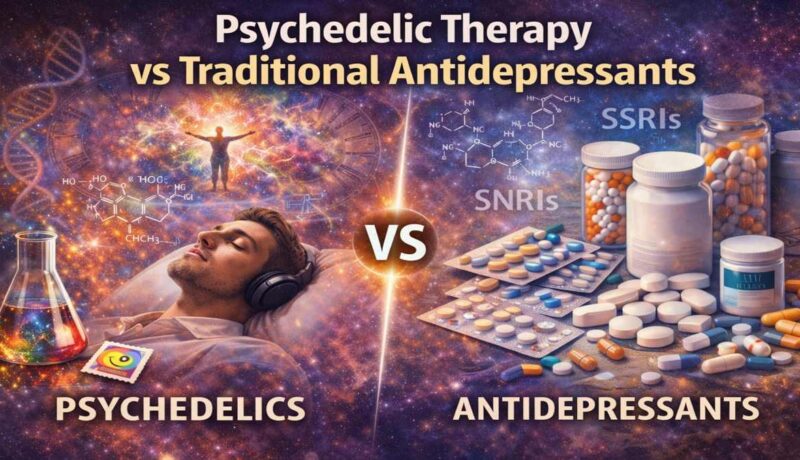
For decades, traditional antidepressants such as SSRIs and SNRIs have been the cornerstone of psychiatric treatment for depression and anxiety disorders. Yet millions of patients continue to struggle with symptoms despite medication and therapy. In recent years, a new approach has captured the attention of scientists and clinicians alike: psychedelic-assisted therapy.
Table Of Content
- A New Frontier in Mental Health Treatment
- What Are Traditional Antidepressants?
- What Is Psychedelic Therapy?
- Comparing Effectiveness: Psychedelics vs Antidepressants
- Speed of Action: One of the Biggest Differences
- How Psychedelics Affect the Brain
- Advantages of Psychedelic Therapy
- 1. Rapid Effects
- 2. Fewer Doses Required
- 3. Psychological Insight
- 4. Long-Lasting Benefits
- Limitations and Risks
- The Future of Mental Health Treatment
Compounds like psilocybin (from psychedelic mushrooms) and LSD (lysergic acid diethylamide) are now being studied in clinical trials for their potential to treat depression, anxiety, and trauma. The comparison between psychedelic therapy and traditional antidepressants is rapidly becoming one of the most important debates in modern psychiatry.
This article explores the science, effectiveness, advantages, risks, and future of psychedelic treatments compared with conventional antidepressant medications.
What Are Traditional Antidepressants?
Traditional antidepressants are medications designed to regulate neurotransmitters in the brain—primarily serotonin, norepinephrine, and dopamine.
The most commonly prescribed types include:
- Selective Serotonin Reuptake Inhibitors (SSRIs)
- Serotonin-Norepinephrine Reuptake Inhibitors (SNRIs)
- Tricyclic antidepressants (TCAs)
- Monoamine oxidase inhibitors (MAOIs)
SSRIs such as fluoxetine and escitalopram are widely used because they are relatively safe and effective for many patients. These drugs work by increasing the availability of serotonin, a neurotransmitter linked to mood regulation.
However, antidepressants often require daily use for weeks or months before noticeable improvements occur, and about 30–40% of patients do not respond adequately to them.
What Is Psychedelic Therapy?
Psychedelic therapy refers to the controlled medical use of psychedelic substances combined with psychotherapy.
Unlike conventional medications, psychedelic treatments typically involve:
- Preparation sessions with therapists
- One or two supervised psychedelic experiences
- Integration therapy to process insights afterward
Common psychedelics studied in clinical research include:
- Psilocybin
- LSD
- MDMA (in PTSD therapy)
These substances interact strongly with the serotonin 5-HT2A receptor, which influences mood, perception, and emotional processing.
Comparing Effectiveness: Psychedelics vs Antidepressants
Recent clinical trials suggest that psychedelic therapies may be as effective—or even more effective—than some traditional antidepressants.
A notable head-to-head study found that psilocybin performed at least as well as the SSRI escitalopram, outperforming it on several secondary measures such as psychological well-being and social functioning.
Another meta-analysis of clinical trials examining psychedelic therapies found large improvements in depression symptoms, with some benefits lasting for months after only one or two sessions.
By contrast, conventional antidepressants typically require continuous daily dosing to maintain their effects.
Researchers are increasingly interested in this difference because psychedelics may produce rapid therapeutic effects, sometimes within days of treatment.
Speed of Action: One of the Biggest Differences
One major distinction between psychedelic therapy and antidepressants is how quickly they work.
Traditional antidepressants usually take two to six weeks before patients begin noticing symptom relief.
Psychedelic treatments, however, may produce rapid improvements after a single session. Some studies have reported reductions in depression symptoms within days, with effects lasting for weeks or months.
Long-term follow-up studies also suggest that psychedelic therapy may produce lasting psychological changes, potentially due to increased neuroplasticity in the brain.
How Psychedelics Affect the Brain
Neuroscientists believe psychedelics may work differently from standard antidepressants by resetting brain network activity.
Research indicates that psychedelic compounds can temporarily disrupt the default mode network (DMN)—a brain system associated with self-reflection and rumination. When overactive, this network is linked to depression and anxiety.
Psychedelics may also increase neuroplasticity, helping the brain form new connections and break rigid patterns of negative thinking.
This could explain why psychedelic therapy sometimes leads to profound emotional insights and long-term behavioral change.
Advantages of Psychedelic Therapy
Psychedelic therapy offers several potential advantages over traditional antidepressants:
1. Rapid Effects
Many patients experience improvement within days rather than weeks.
2. Fewer Doses Required
Instead of daily medication, psychedelic therapy often involves only one or two sessions.
3. Psychological Insight
Many participants report transformative experiences that lead to new perspectives on trauma, relationships, and personal meaning.
4. Long-Lasting Benefits
Some studies suggest improvements may last months or even years in certain patients.
Limitations and Risks
Despite promising research, psychedelic therapy is not a miracle cure.
Potential challenges include:
- Legal restrictions in many countries
- Intense psychological experiences during treatment
- Need for trained therapists and controlled environments
Clinical trials also report temporary side effects such as anxiety, nausea, and hallucinations during psychedelic sessions.
Experts emphasize that psychedelics should only be used in supervised medical settings, not recreationally.
The Future of Mental Health Treatment
Interest in psychedelic medicine is growing rapidly, with major universities and pharmaceutical companies investing in research.
Phase-2 and Phase-3 clinical trials are currently underway to evaluate the safety and effectiveness of psychedelic therapies for conditions such as:
- Major depressive disorder
- Treatment-resistant depression
- PTSD
- Anxiety disorders
If future trials confirm the early results, psychedelic therapies could become a revolutionary alternative to traditional antidepressants.




No Comment! Be the first one.